
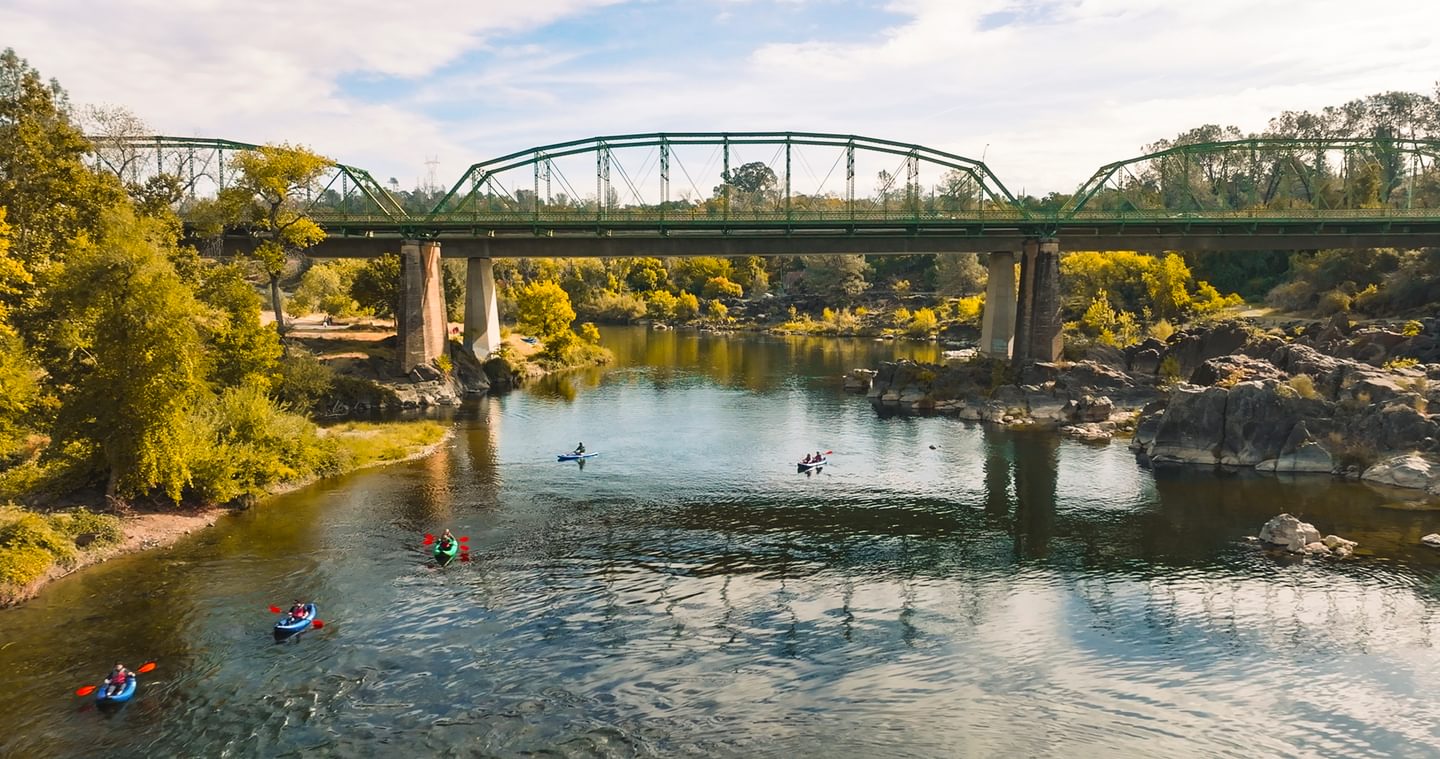
Located just downstream from the Feather River Fish Hatchery, the Table Mountain Bridge is a dedicated pedestrian and bicycle path running parallel to Table Mountain Boulevard.
Originally built in 1907 to carry vehicle traffic across the Feather River, the steel truss bridge now serves as a scenic, car-free walkway. It offers elevated views of the river and the distant mesas of Table Mountain, making it a favorite spot for a morning stroll or an evening walk.
The Oroville Lights Display
After dark, the historic bridge is illuminated with thousands of colorful LED lights. While the bridge features a steady, shifting color display nightly, the riverfront comes alive on weekends and holidays with themed light shows.
The display provides a scenic backdrop to the riverfront, whether you are walking across the steel spans to see the colors up close, looking across the water after dinner downtown, or relaxing in a lawn chair by the riverbank to watch a weekend show.
For the best viewing spot, head to the Butte County Veterans Memorial Park.
To check the current schedule and special holiday themes, you can visit the official project site at Oroville Lights.
A Brief History of the Bridge
The history of building bridges across this specific stretch of the Feather River is essentially a history of surviving floods. Long before the Oroville Dam was built to control the river’s flow, a wooden covered bridge stood at this site in 1870, but it was completely destroyed by a massive flood in early 1907.
Later that same year, workers raised the current 665-foot steel “camelback” truss bridge to take its place. The engineering proved its worth in October 1962, when a historic autumn flood entirely submerged the bridge under rushing water, but the steel structure held strong without taking any damage.
When a modern concrete bridge was built next to it in 1982 to handle highway traffic, the city preserved the historic 1907 steel landmark exclusively for people to walk, bike, and enjoy.